

Is My Dog Overweight? We Explain How to Use Body Condition Scoring to Determine If Your Dog Is Overweight
Keeping your dog at a healthy weight is one of the most important things you can do for their overall well-being. Dogs that carry extra pounds face higher risks of joint problems, diabetes, heart disease, and a shorter lifespan. But how can you tell if your dog is overweight without guessing? Body Condition Scoring (BCS) offers a clear, practical way to assess your dog’s weight and body fat. This guide explains how to use BCS to determine if your dog is overweight and what steps to take next.

What Is Body Condition Scoring?
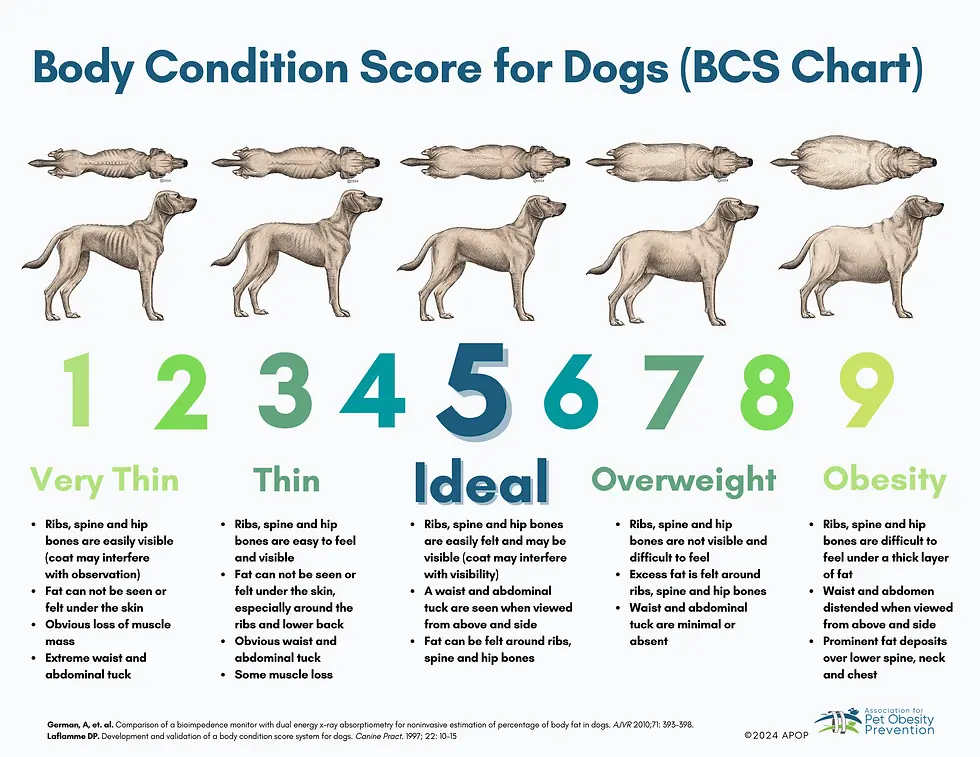
Body Condition Scoring is a visual and hands-on method used by veterinarians and pet owners to evaluate a dog’s body fat. It involves checking specific areas of your dog’s body to see how much fat covers the ribs, spine, and waist. The most common BCS scale ranges from 1 to 9:
1 to 3: Underweight
4 to 5: Ideal weight
6 to 9: Overweight to obese
A dog with a score of 6 or higher is considered overweight, meaning they have excess fat that could harm their health.
How to Perform Body Condition Scoring at Home
You don’t need special tools to perform BCS. Follow these steps to check your dog’s body condition:
1. Look at Your Dog from Above
Stand over your dog and look down at their back and waist. You should see a noticeable waistline behind the ribs. If the waist is missing or bulging out, your dog may be overweight.
2. Check the Ribs by Touch
Run your hands along your dog’s sides, feeling the ribs without pressing hard. You should be able to feel the ribs easily but not see them. If you cannot feel the ribs at all, your dog likely has excess fat.
3. Observe the Side Profile
Look at your dog from the side. The belly should tuck up behind the ribcage. A sagging belly or no visible tuck can indicate overweight.
4. Feel the Spine and Hips
Gently press along the spine and hips. You should feel the bones with a thin layer of fat covering them. If the bones are hard to feel, your dog may be carrying too much weight.
Examples of Body Condition Scores
Score 3 (Underweight): Ribs, spine, and hip bones are easily visible and felt with no fat covering. Waist is very pronounced.
Score 5 (Ideal): Ribs can be felt without excess fat. Waist is visible from above and belly tucks up from the side.
Score 7 (Overweight): Ribs are hard to feel under a thick layer of fat. Waist is barely visible or missing. Belly may sag.
If your dog scores 6 or above, they are overweight and need a weight management plan.
Why Body Condition Scoring Works Better Than Weight Alone
Simply weighing your dog on a scale doesn’t tell the full story. Dogs come in different breeds and sizes, so a healthy weight for one dog might be overweight for another. BCS focuses on fat coverage rather than total weight, giving a more accurate picture of your dog’s health.
For example, a muscular dog might weigh more but have a perfect BCS. Conversely, a dog with a normal weight but poor muscle tone and excess fat can be overweight by BCS standards.
What to Do If Your Dog Is Overweight
If your dog’s BCS shows they are overweight, take these steps:
Consult your veterinarian for a full health check and personalized advice.
Adjust your dog’s diet by reducing calorie intake and choosing high-quality, balanced food.
Increase physical activity with daily walks, playtime, and mental stimulation.
Monitor progress by regularly checking your dog’s BCS every few weeks.
Weight loss should be gradual and steady to avoid health risks. Your vet can help you set realistic goals and track improvements.
Tips for Maintaining a Healthy Weight
Feed measured portions instead of free feeding.
Avoid giving too many treats or table scraps.
Choose treats that are low in calories and healthy.
Keep your dog active with regular exercise suited to their age and breed.
Schedule regular vet visits to monitor weight and overall health.
Using BCS regularly helps catch weight issues early before they become serious problems.


Comments