

Why Brushing Your Cat’s Teeth Matters More Than Grooming
A glossy coat is easy to admire. Clean teeth are easier to ignore, until a cat stops eating, drools, paws at their mouth, or needs dental treatment under anaesthetic.
Many cat owners put grooming at the top of the care list because fur is visible. Mats, shedding, and hairballs make themselves known. Dental disease grows quietly. By the time it looks obvious, the mouth may already be sore.
That is why the phrase “don’t groom your cat, brush their teeth instead” lands with a useful jolt. It does not mean coat care has no value. Long-haired cats, older cats, and cats with mobility problems often need help staying tidy. But for most healthy short-haired cats, daily tooth care is usually the more neglected and more important habit.
Cats already spend a huge part of their day grooming. They do not brush their own teeth.
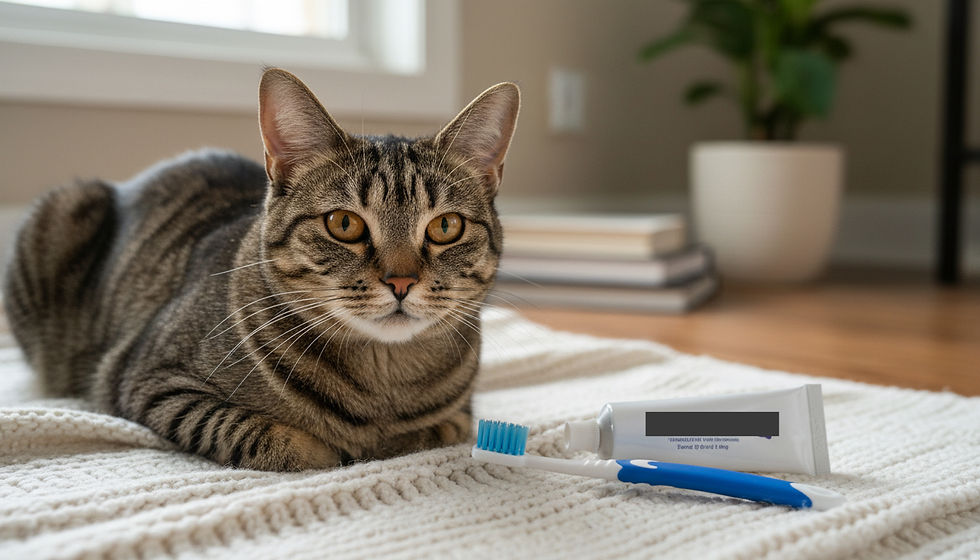
Cats are built to groom themselves, but not to clean their teeth
Most cats are excellent self-groomers. Their tongues have tiny hook-like structures that help remove loose hair, dirt, and debris. A healthy cat will usually keep their coat in reasonable shape without much help.
Tooth care is different. Food particles and bacteria collect along the gumline. Over time, plaque can harden into tartar. Gums can become inflamed, teeth can loosen, and the mouth can become painful.
A cat cannot scrape along the gumline with a brush. Chewing some foods may help a little, but it does not replace mechanical cleaning. The same is true for dental treats and water additives. Some products can support oral care, but brushing is the closest home habit to what the mouth actually needs.
This matters because cats often hide discomfort. A cat with a sore mouth may still eat, especially if hunger wins. They may chew on one side, swallow pieces whole, avoid hard food, or become quieter. These changes can be subtle.
A coat problem is usually easy to spot. A dental problem may stay hidden until it hurts.
Grooming feels productive because you can see the results
Brushing a cat’s coat gives instant feedback. Fur comes off the brush. The coat looks smoother. There may be fewer hairs on the sofa. For long-haired breeds, grooming can prevent painful mats, especially around the armpits, belly, and back legs.
So grooming feels like care because it looks like care.
Tooth brushing is less satisfying at first. A cat may tolerate only a lick of toothpaste from your finger. The brush may touch one tooth. Nothing looks different afterwards. No pile of fur proves that progress happened.
That is part of the problem. Oral care works by preventing damage that has not yet become visible. It is quiet maintenance. It takes patience before it feels like a habit.
Still, prevention is kinder than crisis care. A few seconds of gentle brushing each day can become normal. It can also make it easier to inspect the mouth and notice changes early.
This is not a call to throw away the grooming brush. It is a call to stop treating coat care as the main event while dental care waits for “someday”.
If a cat will only accept one type of hands-on care at first, make the mouth the priority and keep grooming simple.
What poor dental care can lead to
This section is general information, not veterinary advice. A vet should check any cat with bad breath, bleeding gums, loose teeth, drooling, swelling, or trouble eating.
Dental disease in cats is common, especially as they get older. The signs can include:
Bad breath that smells sour, rotten, or unusually strong
Red, swollen, or bleeding gums
Yellow or brown build-up near the gumline
Drooling, sometimes with blood
Pawing at the mouth
Dropping food while eating
Preference for soft food when hard food used to be fine
Weight loss or reduced appetite
Hiding, grumpiness, or reluctance to be touched near the face
Some cats also develop painful tooth resorption, where the tooth structure breaks down. This needs veterinary assessment. Brushing cannot fix a damaged tooth, but a regular mouth-care routine can help owners notice changes sooner.
A painful mouth can affect more than feeding. Cats use their mouths to pick up toys, chew, groom, and explore. If the mouth hurts, life gets smaller.

How to start brushing without turning it into a battle
The biggest mistake is trying to brush properly on day one. Most cats will reject that. The goal is not a perfect clean at first. The goal is to make tooth care boring, predictable, and safe.
Use a toothpaste made for cats. Do not use human toothpaste, as it can contain ingredients that are not safe for pets. A small cat toothbrush, finger brush, or soft gauze wrapped around a finger can work. Some cats prefer one tool over another.
Start while the cat is relaxed, not hungry, playful, or already annoyed. Keep sessions short. Stop before the cat struggles.
Build the habit in small steps
Try this slow approach:
Touch around the cheeks and lips
Stroke the side of the face briefly, then reward with praise, food, or play. Do not force the mouth open.
Lift the lip for one second
Lift the lip just enough to see the outside of the teeth, then stop. Repeat until this feels ordinary.
Touch one tooth
Use a finger, gauze, or brush. Touch the outer surface of a front or canine tooth. One tooth counts as progress.
Brush the outside surfaces
Focus on the teeth along the cheeks and the gumline. Cats often resist full mouth handling, and the outer surfaces are where brushing is most practical at home.
Keep it short
A few seconds every day often beats one long weekly struggle.
Let the cat taste the toothpaste but start slow
Offer a tiny amount from a finger or spoon. Do this for a few days if needed. The cat should learn that the taste is safe and predictable. If they dislike the toothpaste focus on brushing.
The key is consent, or as close as cat care allows. If a cat pulls away, hisses, growls, or becomes tense, back up to an easier step. Pushing through may teach the cat that tooth brushing is a threat.
A calm routine matters more than perfect technique.
What to do if your cat refuses the toothbrush
Some cats have a long history of hating mouth handling. Others may already have dental pain, which makes brushing unfair and unsafe. If a cat reacts strongly, book a veterinary dental check before trying again. You can try swapping toothbrushes they come in all shapes and sizes.
Pain changes behaviour. A cat that “will not cooperate” may actually be protecting a sore mouth.
If the vet gives the all-clear and brushing is still difficult, aim for gradual progress rather than all-or-nothing success. You can also ask about dental diets, approved dental treats, gels, rinses, or other options. These are not equal replacements for brushing, but they may help as part of a wider plan.
For cats that cannot be brushed, mouth checks still matter. Look for:
New bad breath
One-sided chewing
Drooling
Reluctance to crunch food
Red gums
Brown build-up
Swelling around the jaw or face
Short, regular checks can catch changes earlier. Pair them with something pleasant, such as a favourite treat or a play session.

Grooming still has a place, but it should not crowd out dental care
There are cats who genuinely need regular grooming help.
Long-haired cats can develop tight mats that pull on the skin. Older cats may struggle to twist and reach their backs. Overweight cats may not groom comfortably. Cats with arthritis, dental pain, or illness may groom less. Outdoor cats may come home with burrs, pollen, mud, or debris in the coat.
In those cases, grooming is not cosmetic. It is comfort care.
Even then, grooming should not be the only hands-on routine. If a cat already accepts brushing for coat care, that trust can help with dental care. Add mouth handling slowly after a grooming session, or at a completely separate calm time if the cat gets overstimulated.
For many cats, the balance could look like this:
Short-haired healthy cat - Quick coat brush as needed, tooth brushing most days
Long-haired cat - Regular coat care plus tooth brushing in small sessions
Senior cat - Gentle grooming support, nail checks, and careful dental monitoring
Cat that hates handling - Vet check first, then tiny steps with high-value rewards
The point is priority. Fur makes a home messy. Teeth can make a cat miserable.
Why brushing beats cosmetic care
Cat grooming often gets treated like a sign of being a devoted owner. There are special combs, grooming gloves, shampoos, wipes, sprays, and deshedding tools. Some are useful. Some are unnecessary. Many cats would happily skip most of them.
Dental care is less photogenic. It takes more patience. It also asks for a kind of care that prevents suffering rather than just improving appearance.
A cat with a slightly scruffy coat may be perfectly content. A cat with inflamed gums may be in daily pain.
That is why brushing your cat’s teeth matters more than grooming. Coat care can make a cat look better. Dental care can help a cat feel better.
The best routine is simple:
Check the coat, but do not overdo grooming
Handle the mouth gently and often
Use cat-safe dental products
Build the habit slowly
Ask a vet about any sign of pain, bad breath, or gum changes
Keep professional dental checks part of normal care
A few calm seconds each day is enough to start.

The takeaway
If time, patience, or your cat’s tolerance is limited, do not spend all of it chasing loose fur. Put more of that effort into the mouth.
Brush the coat when it helps. Prevent mats. Support cats who cannot groom themselves well. But do not let grooming become the stand-in for health care.
Start with one tiny dental step today: let your cat taste cat-safe toothpaste, touch one tooth, or simply lift the lip for a second and reward calm behaviour. Build from there.
A shiny coat is nice. A comfortable mouth matters more.


Comments